
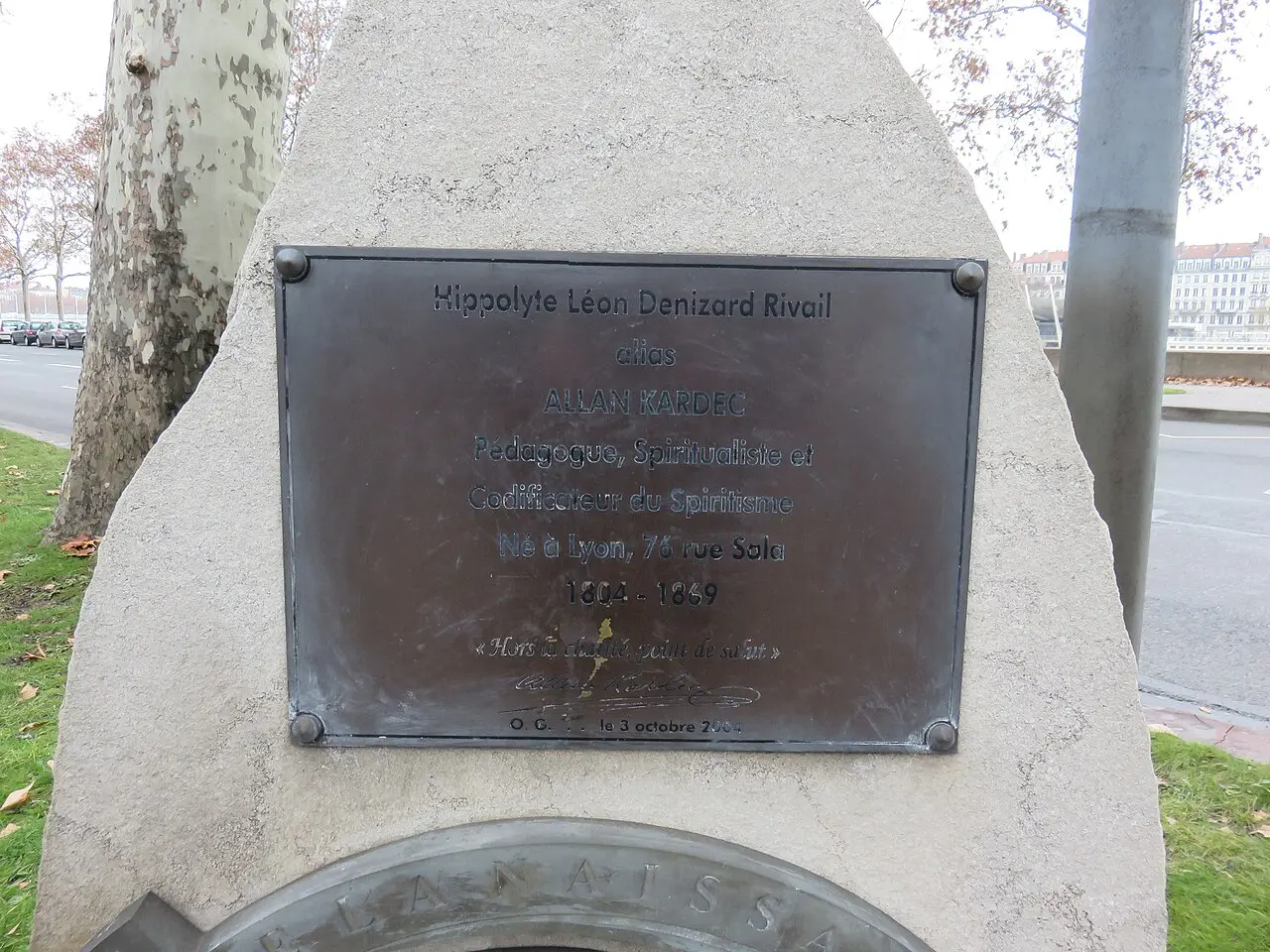
The history of great ideas often begins with calm men devoted to study. Such was the case of Hippolyte Léon Denizard Rivail, whom the world came to know and respect as Allan Kardec. Far from seeking notoriety or founding a personal sect, Kardec put his broad experience as an educator and scientist at the service of a question that has always accompanied humanity: what happens to our soul before and after existence on Earth?
On Mundo a Passeio's faith and reflection caravans, many of our travellers have a special fondness for Spiritist teachings, or are simply curious to understand the origins of this movement of welcome and charity that has put down such deep roots in Brazil.
A brilliant mind trained to educate
Born in Lyon on 3 October 1804, Rivail was educated in Switzerland at the Yverdon Institute under the direct guidance of Pestalozzi, learning from a young age the importance of practical observation, kindness and respect for the pupil. Fluent in several languages and author of school textbooks adopted by the University of Paris, he built an impeccable reputation in the French capital.
When he was invited to witness the famous table-turning sessions in 1855, his initial reaction was that of an honest sceptic. He said he would bow only to clear facts and rational causes. Having established that the movements were not fraud and that intelligent answers were given on complex subjects of philosophy and morality, he realised there was a new law of nature to be uncovered.
The five foundation stones of the Codification
Under the pseudonym Allan Kardec, he devoted the last fourteen years of his life to structuring a body of knowledge based on dialogues with spirit communicators, repeatedly cross-checked and verified. This work resulted in five fundamental works:
- O Livro dos Espíritos (1857): The Spirits' Book establishes the foundations of the immortality of the soul, successive lives (reincarnation) and the moral laws that govern the universe.
- O Livro dos Médiuns (1861): The Mediums' Book rigorously analyses the different forms of spiritual perception and teaches the importance of discipline and ethics in the practice of mediumship.
- O Evangelho Segundo o Espiritismo (1864): The Gospel According to Spiritism reinterprets the message of Jesus, highlighting love of one's neighbour, tolerance and forgiveness as daily guides.
- O Céu e o Inferno (1865): Heaven and Hell examines divine justice without eternal punishment, offering moving accounts of the soul's transition after death.
- A Gênese (1868): Genesis addresses the harmony between scientific discoveries, the evolution of the planet and spiritual laws.
A legacy of comfort and fraternity
Kardec passed away in Paris on 31 March 1869, but his work crossed borders and found in Brazil its most fertile ground for fraternity, inspiring hospitals, orphanages, schools and support centres for people in suffering throughout the country. His message remains alive: faith that reasons does not fear questions, and practical charity is the greatest path of moral evolution.
The paths of spirituality with Mundo a Passeio
Visiting the places where this message of comfort became living action is an unforgettable experience. On our caravans leaving from Porto Alegre for the Triângulo Mineiro (Uberaba and Sacramento) or for Bahia (Salvador and Mansão do Caminho), our travellers experience days of retreat, respect and deep emotion.
Want to travel with people who understand and care for your moment with warmth? See our spiritual itineraries and upcoming departures or message Ana Carla on WhatsApp to find out more about dates and details of the caravans.
Sources and references
- Works of the Spiritist Codification compiled by Allan Kardec (1857-1868), historical editions of the Federação Espírita Brasileira (FEB).
- Biography of Allan Kardec by Henri Sausse and commemorative centenary articles of the Conselho Federativo Nacional.
- Travel diaries and field archive of Mundo a Passeio's caravans across Brazil.


