
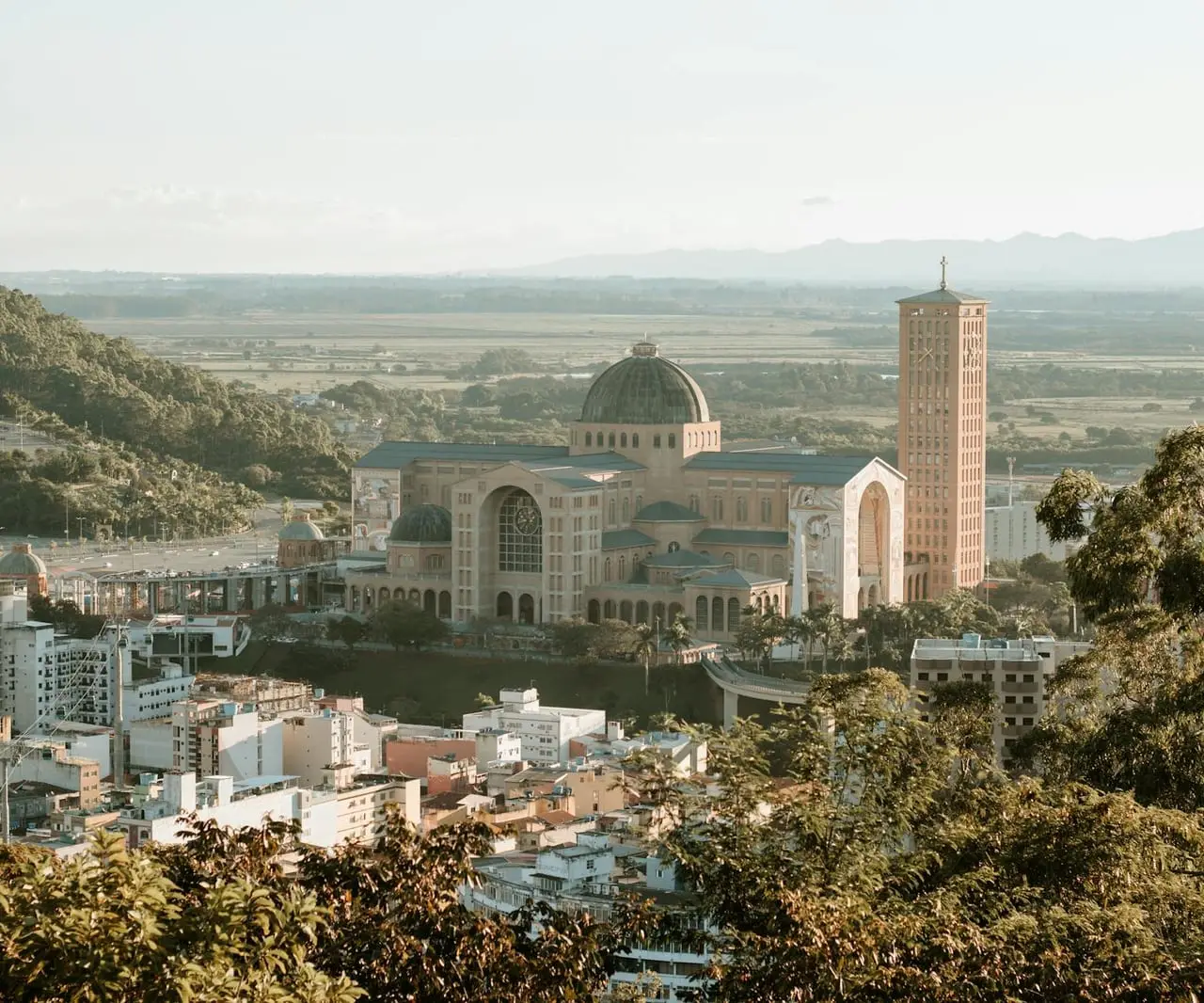
The Basílica de Nossa Senhora Aparecida, in Aparecida, São Paulo, is the largest Marian shrine in the world and one of the largest Catholic churches in the world. Mundo a Passeio includes it in faith and culture itineraries departing from Porto Alegre.
Where is the Basílica de Aparecida?
The Basílica de Aparecida is in the municipality of Aparecida, in the state of São Paulo, on the banks of the Paraíba do Sul river. The town grew up around the shrine and today receives visitors from all over Brazil and from other countries throughout the year, especially around dates linked to the patron saint of Brazil, when the number of pilgrims tends to rise significantly.
The urban layout of Aparecida has historically been shaped by the flow of pilgrims, with hotels, restaurants and shops selling religious items concentrated around the shrine.
What is the origin of the image of Nossa Senhora Aparecida?
The image of Nossa Senhora Aparecida was found in 1717 by fishermen in the Paraíba do Sul river, according to the historical account of the Catholic Church, and has been venerated in the region since that episode. The account says the image was found in parts, first the body and then the head, and that after this discovery the fishing at the site is said to have been unusually plentiful that day.
In 1930, Pope Pius XI proclaimed Nossa Senhora Aparecida the patron saint of Brazil, consolidating the shrine as a centre of national pilgrimage and further raising its importance in the country's Catholic religious calendar.
What is there to see inside the Basílica de Aparecida?
Inside the Basílica de Aparecida, visitors will find the Capela das Velas (Candle Chapel), where worshippers light candles as part of their devotion, the Salão dos Milagres (Miracles Room), which holds objects left by devotees over the years as a token of thanks, and the main altar, where the original image of Nossa Senhora Aparecida is kept. Each of these spaces has its own role within the shrine's visitor flow.
The structure of the church, one of the largest in the world by built area, allows large numbers of visitors to move through even on the busiest days, with wide corridors designed specifically to accommodate large-scale pilgrimages.
Do you have to be Catholic to visit the Basílica de Aparecida?
You do not need to profess the Catholic faith to visit the Basílica de Aparecida. The church receives visitors of different beliefs who are interested in the architecture, the history and the cultural significance of the shrine for Brazil. Many visitors come for the historical and artistic value of the building, regardless of any personal religious affiliation.
Entry to the basilica is open to the general public, with the behaviour expected in any religious space, such as silence and discreet conduct during services in progress.
How does the Basílica de Aparecida fit into a Mundo a Passeio caravan?
The Basílica de Aparecida is often part of the faith itineraries organised by Mundo a Passeio, departing from Porto Alegre and frequently combined with other religious destinations in the region, such as Guaratinguetá. Combining these towns allows travellers to explore different chapters of the religious history of the Vale do Paraíba on the same trip.
The time spent at the basilica and the other stops on the itinerary should be confirmed on WhatsApp before the trip, as Mundo a Passeio may adjust the make-up of the itinerary according to the departure date.
Is there a museum linked to the history of the Basílica de Aparecida?
The shrine complex in Aparecida maintains spaces of remembrance dedicated to the history of the devotion to Nossa Senhora Aparecida, including references to the original discovery of the image in 1717 and to the development of the church building over the twentieth century. These spaces help visitors understand the historical context behind the largest Marian shrine in the world.
A visit to these spaces usually complements the experience inside the basilica, deepening understanding of how the site became one of the greatest destinations for Catholic pilgrimage in the world.
What is the difference between the Basílica de Aparecida and other Catholic shrines in Brazil?
The Basílica de Aparecida stands apart from other Brazilian Catholic shrines through the scale of the building and the status of national patron saint attributed to Nossa Senhora Aparecida since 1930, which makes it an essential destination in the country's calendar of Catholic pilgrimages. Other regional shrines have local or state-level importance, but none draws the same number of pilgrims throughout the year.
This central place in Brazilian Catholic faith is also reflected in the infrastructure of the town of Aparecida, largely planned to receive organised groups from different regions of the country, including caravans such as those organised by Mundo a Passeio.
See also Guaratinguetá and Frei Galvão: what to visit, Allan Kardec: who he was and what he wrote and more itineraries at /blog.


