A group trip can have enough seats on paper and still run out of luggage space, lack a workable pick-up point or miss a stop that passengers need. Choosing between a van, minibus and coach therefore starts with the whole itinerary, rather than the passenger count alone. That preparation lets an agency request comparable proposals and explain to travellers what has actually been confirmed.
At Mundo a Passeio, we start with the route and the people travelling. We consult partner transport operators across Brazil according to the itinerary, availability and feasibility of the service. We do not own a fleet. The vehicle, its configuration and included services must be confirmed for each trip.
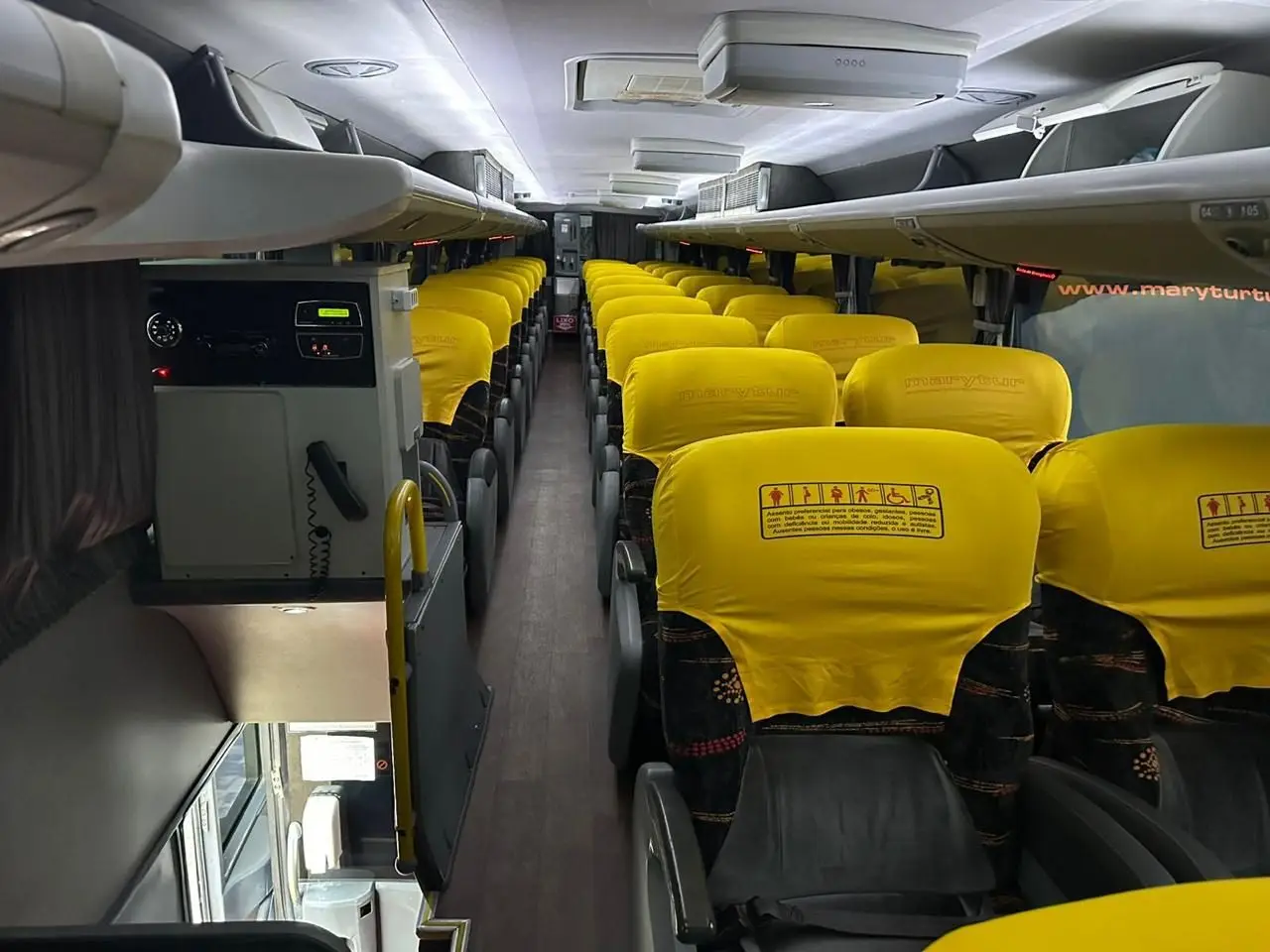
Photo from the archive of our partner brand Guatambu Travel: seats and aisle in one recorded vehicle. It does not identify the coach that would be provided for a future Mundo a Passeio booking. Guatambu Travel photo archive.
Map the journey from departure to return
Write down the starting point, destination, meeting places, local excursions and return. Include every place where passengers must get off, wait or board again. A coach that works well for the main road journey may face access restrictions near a historic centre or hotel. Exact addresses and access conditions belong in the enquiry alongside dates and times.
Think about the pace, too. Frequent boarding makes access arrangements especially relevant. On a more continuous journey, seating and opportunities to rest carry more weight. No single number of travel hours dictates the right category. Route, proposed vehicle and passenger needs must be considered together.
Count people, bags and access needs
Passenger numbers begin the calculation but do not finish it. Ask how many suitcases and pieces of equipment will travel on the vehicle and whether any are bulky. A van may seat a smaller group without taking all its luggage. A minibus may offer a more suitable configuration in another case. A coach can enter the comparison when the group or its space requirements call for it.
Record boarding, movement and seating needs early, especially for children, older travellers and passengers with reduced mobility. Request details of the actual vehicle offered: seat layout, access, luggage compartments and available equipment. Vehicle size and an illustrative photograph cannot establish those details.
Match the configuration to every stage
Imagine an agency planning a departure from Porto Alegre, a visit to another city and short journeys during the stay. “Will everyone fit?” is only one question. The agency also needs to establish whether the same vehicle will cover every leg, reach the planned stops and have somewhere to park. If a leg needs a different arrangement, that should appear in the proposal before the programme is promised to the group.
For a night journey, discuss what passengers expect in terms of rest. Brazilian commercial labels such as executivo, semi-leito and leito refer to service and seating configurations, often translated as executive, semi-sleeper and sleeper. They do not describe the vehicle's size. Ask about recline, supports, spacing between rows and other features relevant to your group. The label opens the conversation; the confirmed configuration should decide it.
A short transfer with substantial luggage illustrates the same point: distance alone does not settle the vehicle choice. A sightseeing itinerary with repeated stops raises different questions about access and boarding. These are prompts for planning, not rules about capacity or maximum journey duration.
Put stops and amenities in the proposal
List the stops you want and the possible places for boarding, breaks and arrival. Ask the operator to assess access, circulation and parking along the route. A comfortable programme for travellers depends on a workable operation at every stage.
Do not assume that a coach includes a toilet, air conditioning, power outlets, internet, a refrigerator, water or other drinks. Ask what the quoted vehicle has, whether it will be working and what the service includes. Record the answers and any stated limitations in the booking terms. An archive photo is an example, not proof that another vehicle has the same amenities.
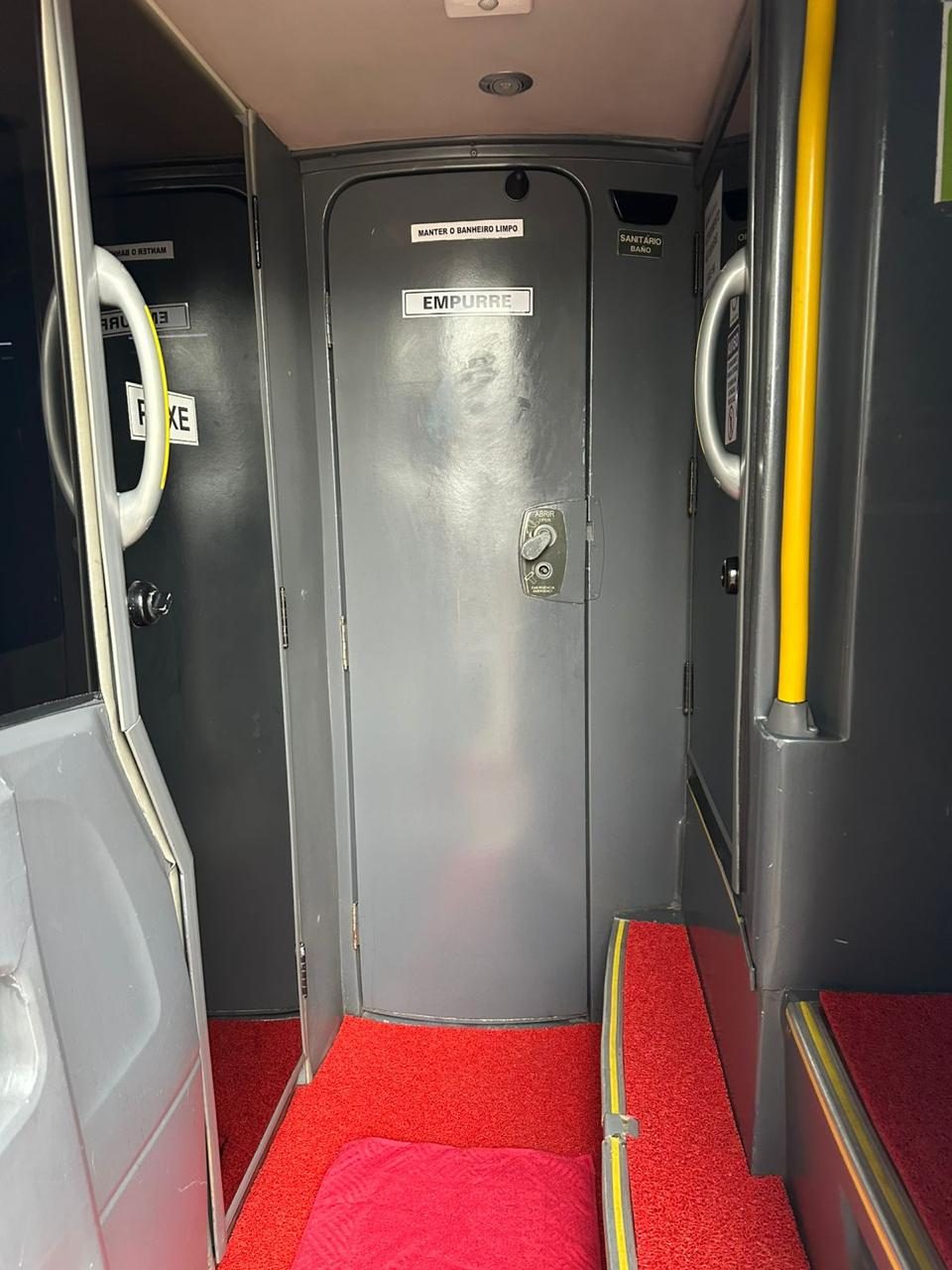
Archive image from our partner Guatambu Travel. This vehicle has visible steps and a toilet door; confirm facilities and access conditions in the vehicle proposed for your route. Guatambu Travel photo archive.
Request a quote that supports a decision
Use one clear route description when comparing options. Include passengers, luggage, mobility needs, dates, times, addresses, local activities and planned stops. Ask for the vehicle and operator's identity, seating configuration, included services and contract terms. If you need both transport and a guide, say what each service should cover.
Confirm with the operator that the proposed service suits the route and the relevant transport authority's requirements. In Brazil, ANTT covers interstate and international road passenger charter services; other journeys require checking the competent local or state authority. This planning check does not replace a pre-trip document review. It does keep the comparison grounded in more than a photo or the quoted price.
With the information side by side, an agency can explain why one option fits its group better. Luggage may decide one trip; boarding, seats or access may decide another. Always ask about the particular vehicle and operation being offered.
Plan with Mundo a Passeio
Send us your route through Mundo a Passeio's coach charter page or WhatsApp. We can enquire about transport and tour guiding, separately or together, for groups and agencies, subject to availability and feasibility through the partner network.
Sources and references
Consulted on 22 October 2026. The planning advice is editorial. Manufacturer examples describe specific models and do not establish what equipment will be available through the consulted network.
- ANTT — Charter transport: scope of interstate and international road passenger charter services in Brazil.
- Volare — Limousine configuration: example of seating configurations and optional equipment.
- Marcopolo — Paradiso G8 1350 catalogue: example of compartments and equipment on one model, dependent on the configuration offered.