Founded on 1 January 1884 in Rio de Janeiro, then the imperial capital, the Federação Espírita Brasileira (FEB) has played, and continues to play, a decisive role in preserving, translating and spreading the works of Allan Kardec, and in offering fraternal guidance to thousands of Spiritist centres across the country.
Knowing the history of the FEB means understanding the historical roots that made Brazil the country with the greatest welcome for, and publication of, Spiritist literature on the planet, inspiring major cultural itineraries for caravans and study groups.
The origins in historic Rio de Janeiro
In the late nineteenth century, Rio de Janeiro was home to prominent public figures, journalists and jurists who were drawn to the ethical and philosophical proposals of Spiritism. Notable leaders such as Augusto Elias da Silva, Francisco Leite de Bittencourt Sampaio and, later, the distinguished physician and parliamentarian Dr. Adolfo Bezerra de Menezes joined forces to found an organisation that would promote unity among Spiritists and selfless support for those in need.
Under the affectionate presidency of Bezerra de Menezes, fondly known as the Doctor of the Poor, the FEB established itself as a point of reference for free medical care, material charity and support for the afflicted.
The historic headquarters and the Brasília monument
Over more than a century of uninterrupted activity, the FEB established two fundamental landmarks in Brazilian cultural history:
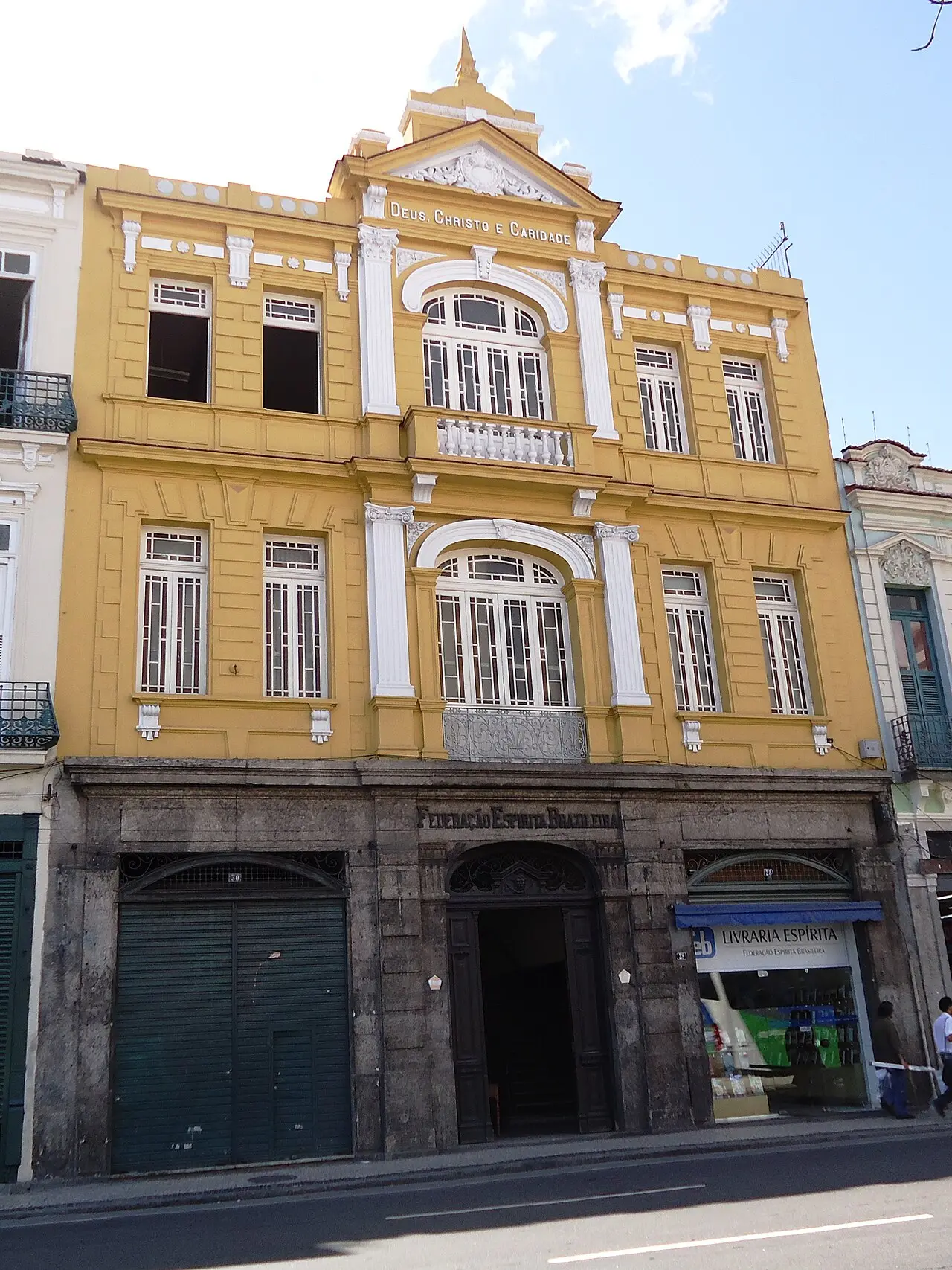
- Historic Headquarters on Avenida Passos (Rio de Janeiro): A handsome neoclassical building opened in 1911 in the heart of Rio de Janeiro, with preserved study rooms, a historic library holding rare editions, and memorials dedicated to Bezerra de Menezes and Guillon Ribeiro.
- Brasília Central Headquarters (DF): When the federal capital moved, the FEB opened an imposing national headquarters in Asa Sul, surrounded by gardens and featuring auditoriums for large congresses and the Conselho Federativo Nacional, which coordinates the Spiritist federations of every Brazilian state.
Publishing and the defence of faithful translation
The FEB became known for Guillon Ribeiro's careful translation of the five fundamental works of the codification, and was also the publisher responsible for bringing to the public the luminous psychographed works of Francisco Cândido Xavier and other eminent spiritual authors, such as Humberto de Campos and André Luiz.
Millions of books have been distributed and translated into foreign languages, alongside the promotion of Esperanto as a language of universal fraternity.
Itineraries of memory and faith with Mundo a Passeio
Visiting the historic FEB headquarters in Rio de Janeiro or its centres of welcome in Brasília is an unforgettable experience of recovering Brazilian cultural memory. On Mundo a Passeio trips, we combine visits to these memorials with excursions to some of the most beautiful postcard sights in the country, bringing together faith, history and well-being.
See our itineraries on the expeditions page or talk to us on WhatsApp.
Sources and references
- Federação Espírita Brasileira (FEB): Histórico da Federação Espírita Brasileira, documentary archive and institutional history.
- WANTUIL, Zêus. Grandes Espíritas do Brasil. Rio de Janeiro: Editora FEB.
- Mundo a Passeio: historical and cultural tourism itineraries in Rio de Janeiro and Brasília.